How are speaker qualifications used to filter event eligibility?
In Events Management, Speaker Qualifications & Requirements play a crucial role in maintaining compliance and ensuring that only eligible, properly trained speakers are selected to present at events. Because speakers vary in their expertise and the topics they are authorized to cover, these requirements heavily dictate how end users interact with the speaker selection process.
Enforcing Qualifications and Compliance
A critical component of Speaker Management is ensuring that a speaker is legally and educationally qualified to present on a specific topic. Business admins can define Speaker Qualifications, which track whether a speaker has completed specific event-topic training or if they are contracted for a particular "Speaker Service." To enforce this, admins create Event Rules that cross-reference the event's topic with the speaker's training.
|
|
These rules are strictly enforced. For example, you can’t save changes to an event's topic or date if those changes would suddenly make your chosen speaker unqualified. |

Executing the Event Selection and Sign-In
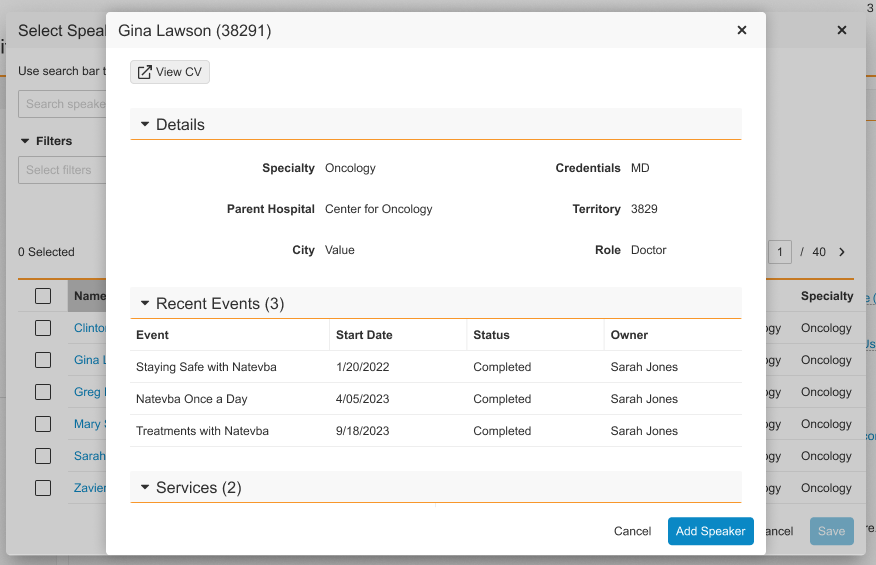
When organizers navigate to their specific event to add a speaker, the system applies all the defined Event Rules to automatically filter the selection list. Filters are either available, automatically defined, or mandatory, depending on the event's associated event rules. If set to "mandatory," the list of available speakers is automatically restricted to only those who hold the correct, active qualifications.
During this step, organizers can view a summary of the speaker's past events, verify their training, and download their CV.
Finally, during the actual execution of the event, speaker management extends to the Digital Sign-in Sheet. Admins can filter out speakers who have specific statuses (for example, "Declined") to ensure that only relevant, confirmed speakers appear as options when signing into the event.